
Plus 30 Journal · City / Public space
A city at walking pace
Thessaloniki’s New Waterfront, seen through the small decisions that make public space inhabitable.
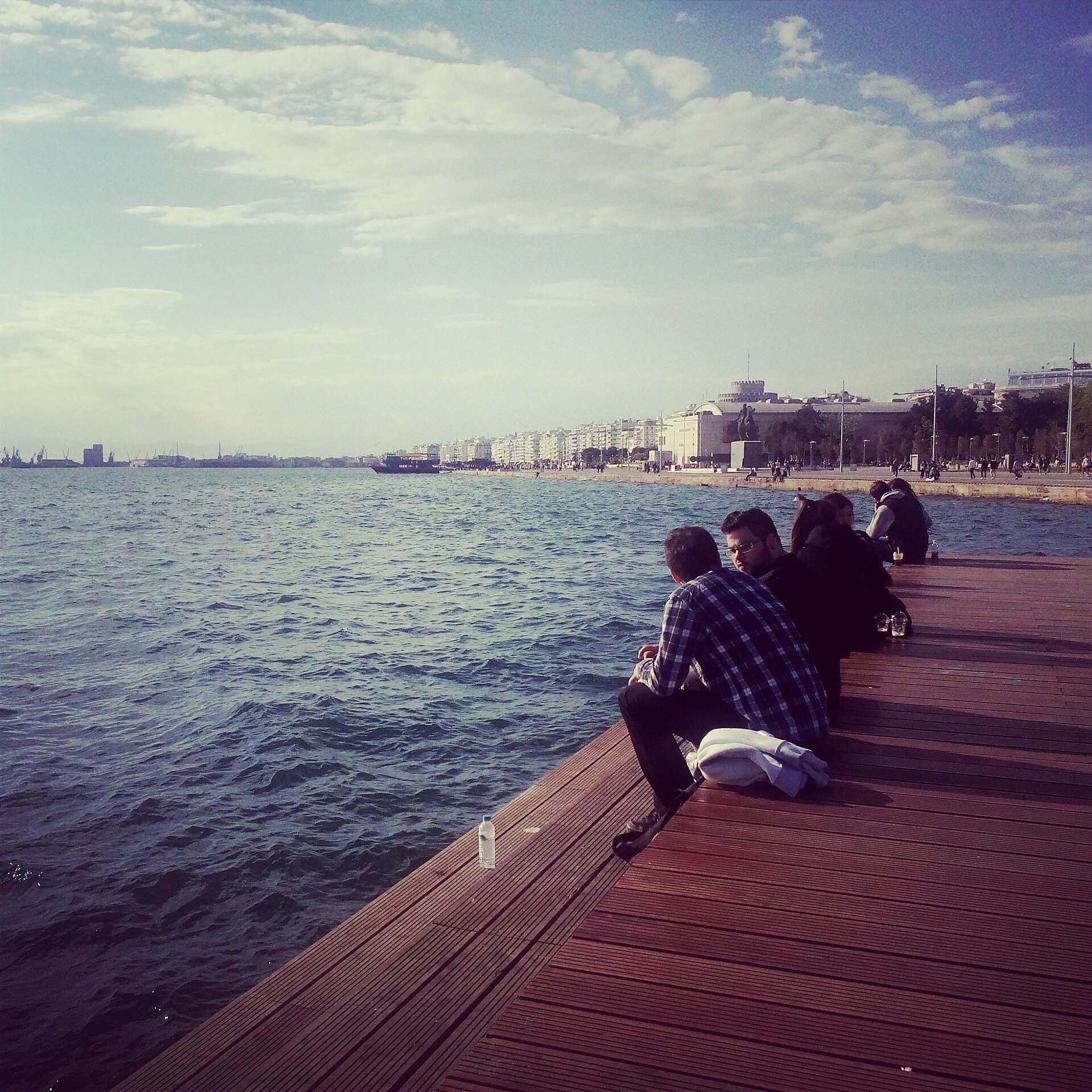
The photograph records something simple: people sitting along the edge of a timber surface beside the water. They do not have to face the same way. Some are talking; others look towards the sea. For a while, the waterfront becomes a shared room without a fixed programme.
The New Waterfront redevelopment by Prodromos Nikiforidis and Bernard Cuomo brings a continuous walk together with a sequence of gardens and places to pause. The Region of Central Macedonia describes planting, seating, playgrounds and water features within that ensemble. Part of its design interest lies in the choice of how to move and where to remain.
The route allows a pause
We often assess a walk in terms of distance. A public space asks us to consider stopping too. Is there somewhere to sit without ordering anything? Is shade available when it is needed? Can we meet someone without organising the whole afternoon? Questions like these bring architecture close to personal experience.
Try a small exercise in observation. Walk one section beside the water, then return along the gardens. Notice how the sense of distance changes, how buildings enter the view and how the sea remains present. The same place can support different rhythms within a single outing.
Using it well also requires care. Maintenance, accessibility and the way routes are shared remain measures of a public project throughout its life. A photograph captures one moment. It cannot assess everything required each day to keep a common space working for different people.
In the Thessaloniki of Plus 30, this relationship with the water belongs to the city’s everyday scale. A meeting, a wait or a walk that grows longer because a conversation has not finished: the waterfront leaves room for these small changes of plan. Its value becomes particularly clear when there is no special occasion, only some time to spend together.